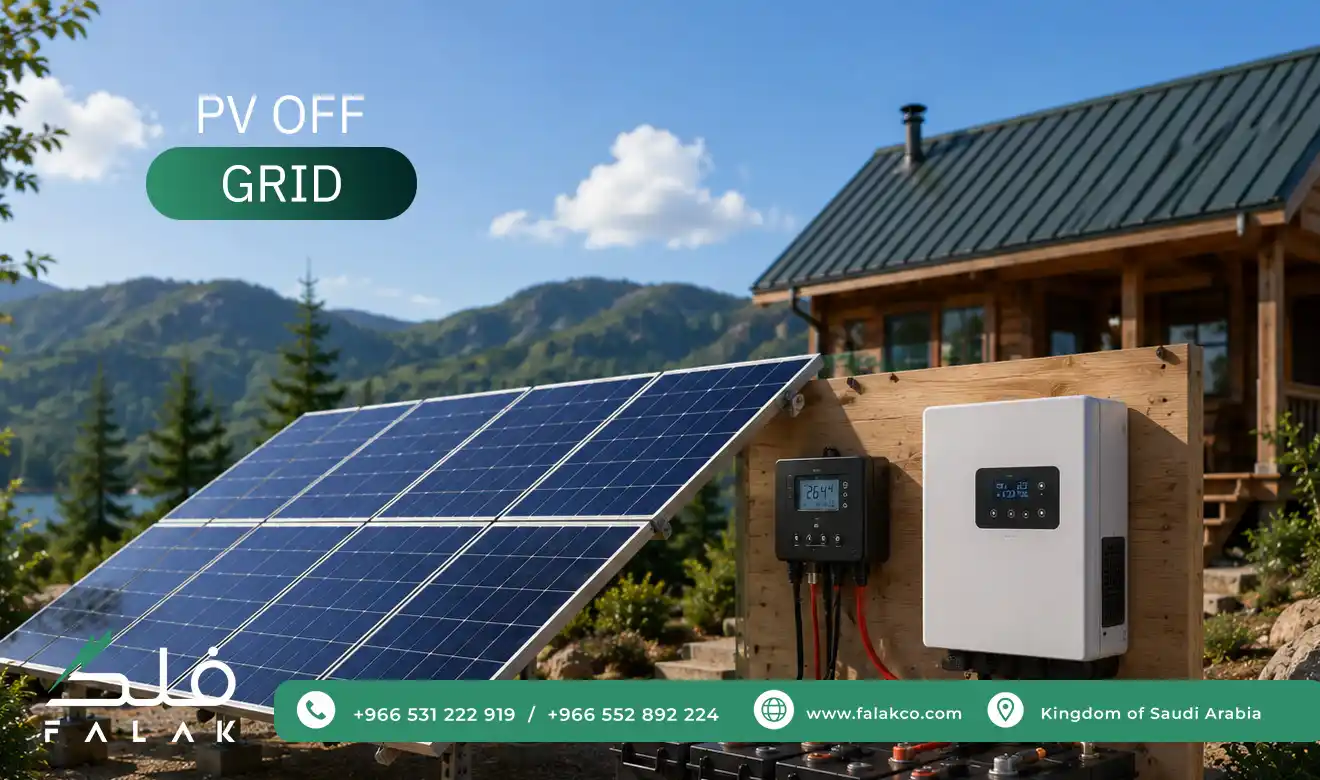
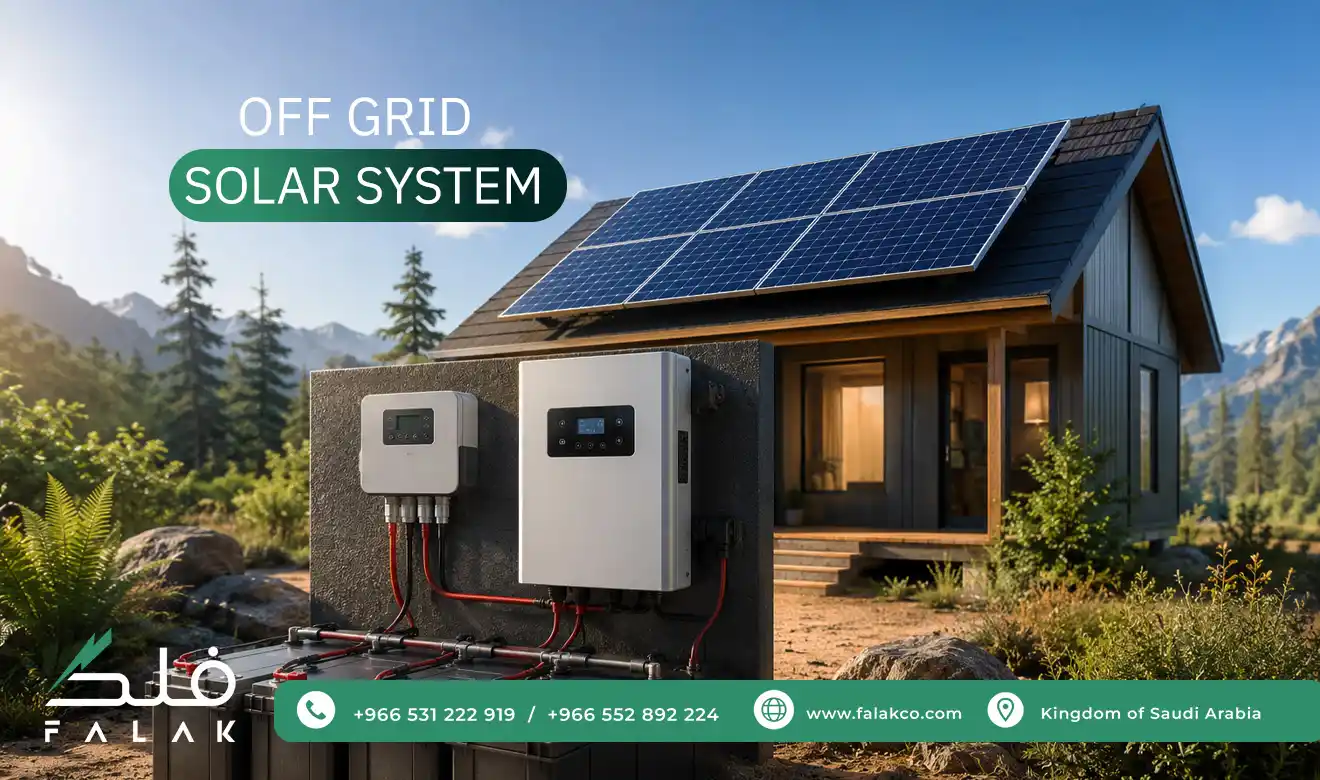
Off grid solar system is an independent source of electricity for properties and facilities that are unable to connect to the conventional electrical grid. In the Kingdom of Saudi Arabia, these systems are especially important for remote farms, agricultural locations, camps, water pumping systems and isolated systems. An off-grid solar system comprises solar panels, a solar battery storage, Solar Inverters , and control equipment that can produce and store electricity based on the energy needs of the site.
What is an Off Grid Solar System?
Off grid solar system is a solar power system which doesn’t use the electrical grid. The system uses solar panels to generate electricity and batteries to store any surplus electricity for later use when the sun isn’t around.
This configuration is also called as stand alone solar system. A solar system KSA solution that is standalone may be helpful where connecting to the grid is challenging, costly or not possible.
Care must be taken with the design of the system since it must supply sufficient electricity to the loads at the site during both sunny and low-sun periods. Before installation, consider factors like electricity usage, peak usage, operating time, sunlight available and backup requirement.
In remote applications, remote solar power systems can generate electricity for lighting, equipment, water pumps, communications systems, etc. without connecting to a conventional power grid.
Main Components of an Off Grid Solar System
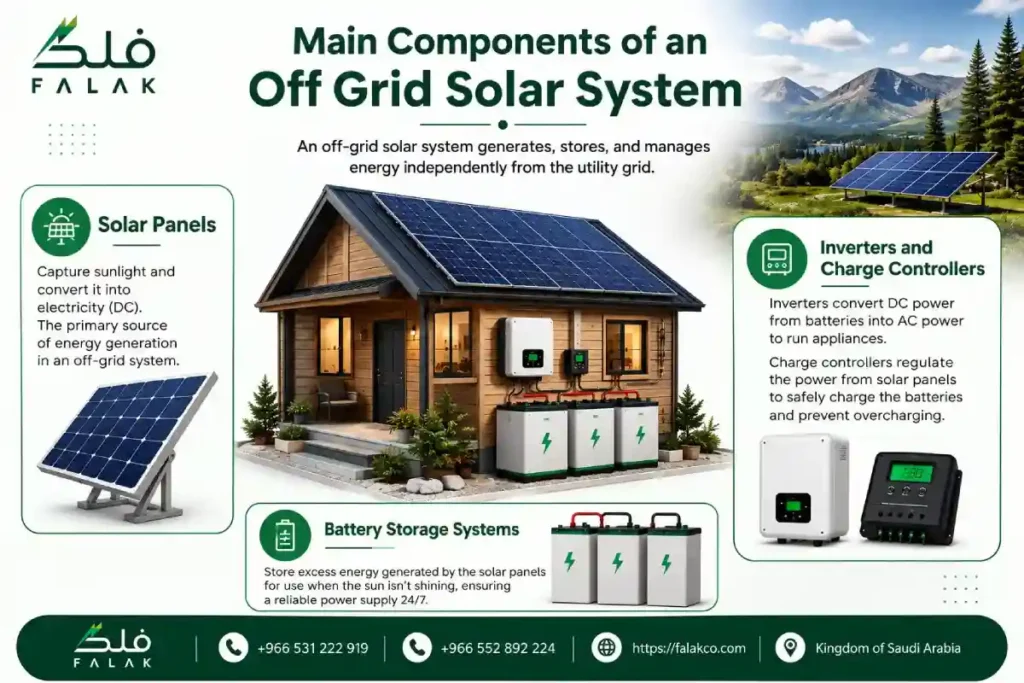
An off-grid system is comprised of a number of components. Each component’s specifications are based on the electricity requirements and operating conditions of the project.
Solar Panels
The sun’s energy is converted into direct current electricity in solar panels. The size and number of panels needed is determined by the amount of energy used, the amount of Solar Energy Systems received, the amount of energy to be produced, daily losses and more.
The orientation of solar panels, mounting structures, wiring, and the site conditions can all impact system performance, which is why it is crucial for professional solar panel installation.
For projects located in Saudi Arabia, it is also important to take into account the high temperatures, dust and other environmental factors that may affect solar generation, in the selection of the panel.
Battery Storage Systems
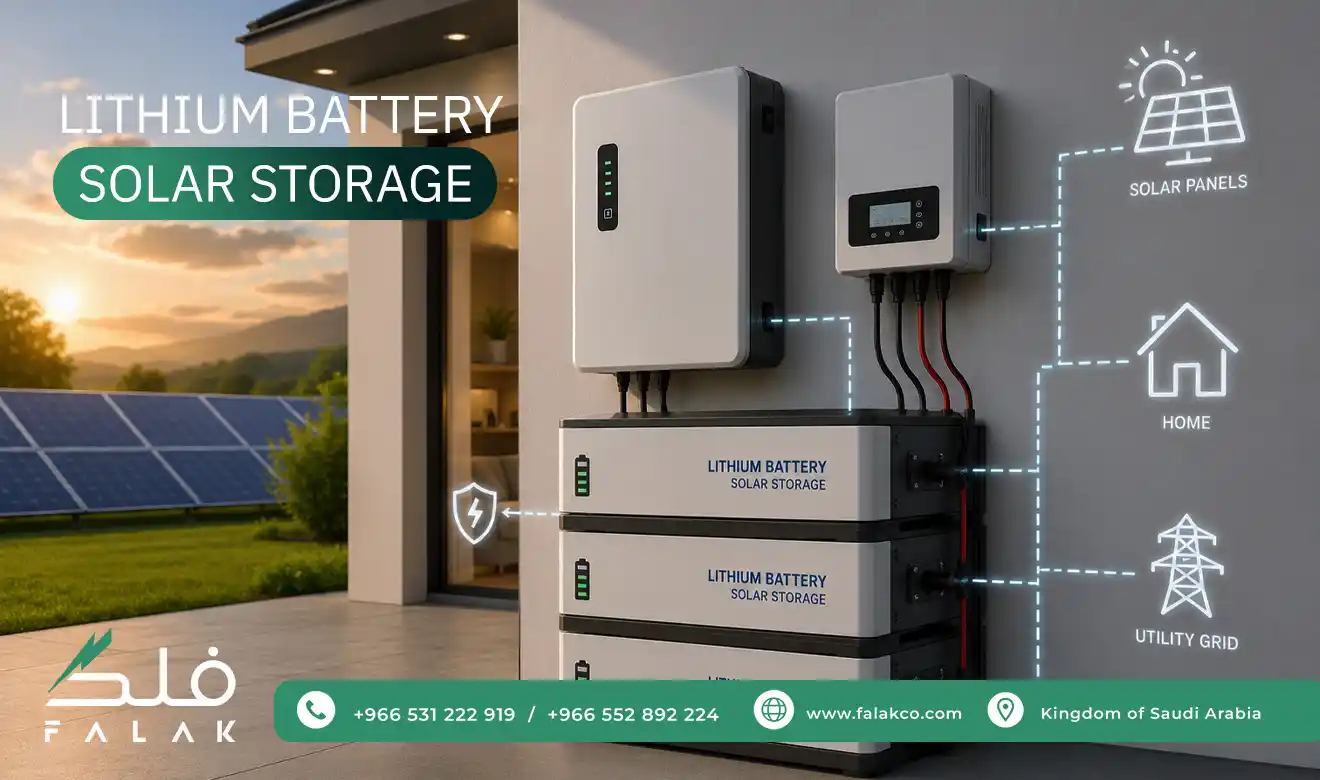
The bulk of most off-grid systems involve battery storage. If the sun produces additional electricity energy, the energy can be stored in batteries. The stored energy can then be used during the night or when there is not enough sunlight production.
The size of the battery will vary depending on the amount of energy used in the property and the length of time the battery is required to operate. Solar battery storage saudi Arabia projects are heavily dependent on battery sizing; over-temperature and operating conditions must be taken into account when sizing and configuring batteries.
Other areas that may impact the overall design include battery technology, depth of discharge, charging cycles and maintenance needs.
Inverters and Charge Controllers
The inverter takes the DC power produced by the solar panels and stored in the batteries and converts it to AC power, which is available to electrical loads that are compatible with the inverter.
The charge controllers control the electricity sent to the batteries from the solar panels. They assist in controlling charging based on the battery and system needs.
Solar power systems in the modern era could incorporate cutting edge inverter and control technologies to optimize energy usage and to provide data regarding the system’s performance.
Off Grid Solar System Installation
Professional installation starts with a site technical assessment. There are several factors to consider when designing for electricity, peak loads, operating schedule, solar exposure, installation space and environmental factors that engineers should consider.
The general installation method is as follows:
- Establishing the energy needs of the property.
- Solar site survey and available solar resource.
- Designing the capacity of the system.
- Choosing solar panels, batteries, inverters and protection devices.
- Installing mounting structures and PV panels.
- Installing the EPE, batteries and inverter.
- Test the performance of the system and electric connections.
- Installing the system and creating a maintenance plan.
Hiring a professional solar panel installer can aid in ensuring appropriate electrical and mechanical attachment.
Cost of Off Grid Solar Systems in Saudi Arabia
The cost of an off-grid system is quite different for each project. An off-grid system will typically need batteries and other equipment to ensure power is available during periods of low solar generation, as opposed to a simple grid-tied setup.
The total cost depends on such things as:
- Required system capacity
- The number of solar panels and their specifications. The quantity and characteristics of the solar panels.
- The size and type of battery.
- Inverter specifications
- Mounting structures
- Electrical protection equipment
- Installation complexity
- Site accessibility
- Required backup duration
- Maintenance requirements
When customer asks about off grid solar system Saudi Arabia prices, it is essential to ask for project specific quotation and not a fixed price.
Another major component of the investment in solar battery storage Saudi Arabia solutions may be the cost of the batteries. The size of the battery should be determined by the actual energy demand and not merely based on the largest battery available.
A specialist provider will be able to size the system and assess the potential energy demand prior to giving a quote.
|
Cost Factor |
What It Depends On |
|
System Capacity |
Required electricity demand |
|
Solar Panels |
Number, size, and specifications |
|
Battery Storage |
Battery type, capacity, and backup duration |
|
Inverter |
Required capacity and specifications |
|
Mounting Structures |
System design and installation location |
|
Electrical Protection |
Required protection and connection equipment |
|
Installation |
Project complexity and site accessibility |
|
Maintenance |
System requirements and service needs |
Falak Company for Off Grid Solar Systems
Falak Solar Energy Systems offers integrated solar products for various applications in agriculture, commercial, government, and other applications in Saudi Arabia. It offers services such as system design, equipment supply, installation, maintenance, technical consultancy, feasibility studies, etc.
Falak offers solar systems configured to suit the needs of each project – both On-Grid Systems and off-grid. It has potential applications in agriculture such as the use of solar-powered water pumping and irrigation systems.
As a solar company in saudi arabia, Falak can help customers during various phases of a solar installation project, including technical evaluation, planning and design, procurement of solar panels, installation and testing, and ongoing maintenance.
It has past experience with agricultural projects, such as submersible pumps (40 HP, 50 HP and 80 HP). This is an application type that illustrates the use of solar technology for meeting energy needs other than the typical residential application.
Falak can provide remote solar power generation solutions in remote locations depending on the electricity usage, operating conditions and the availability of solar resources at the location.
Get the Right Off Grid Solar Solution
Choosing an off-grid system starts with understanding your actual energy requirements. Falak can assess your application and help determine the appropriate combination of solar generation, battery storage, and power conversion equipment. Contact Falak today to discuss your project and explore an off grid system designed for your requirements.
FAQs
Which solar is better, on grid or off-grid?
Neither system is universally better. On-grid systems are generally suitable for properties with reliable grid access, while off-grid systems are designed for locations that require independent electricity. The right choice depends on grid availability, energy consumption, backup requirements, and project conditions.
What size solar system do I need to run off-grid?
The required size depends on daily electricity consumption, peak loads, operating hours, available sunlight, battery capacity, and the desired backup period. A professional energy assessment should calculate the required panel, inverter, and battery capacities rather than using a standard system size.
Is an off grid solar system suitable for homes in Saudi Arabia?
Yes, an off-grid system can be suitable for homes in remote areas where grid electricity is unavailable or difficult to access. The system must be correctly sized to meet household loads and provide sufficient battery storage for nighttime and low-sunlight periods.
What are the common problems with off-grid solar?
Common issues can include insufficient battery capacity, incorrect system sizing, dust accumulation on panels, battery degradation, inverter problems, and higher electricity demand than originally calculated. Regular maintenance and accurate system design can help address these issues.
What is the lifespan of an off grid solar system?
The overall lifespan depends on the quality and maintenance of its components. Solar panels can operate for decades, while batteries generally have a shorter service life and may require replacement during the system’s operating period. Proper maintenance can help preserve system performance.