One of the most viable solar systems is an on grid solar system for properties already connected to the electrical grid. These systems can be used to power homes, businesses, farms and other facilities in Saudi Arabia by harnessing sunlight, without disconnecting from the existing electrical grid. Saudi Arabia, due to its immense solar potential and increasing interest in renewables, grid connected solar can play a role in reducing the conventional electricity usage without battery storage, in its conventional configuration.
What is an On Grid Solar System in Saudi Arabia?
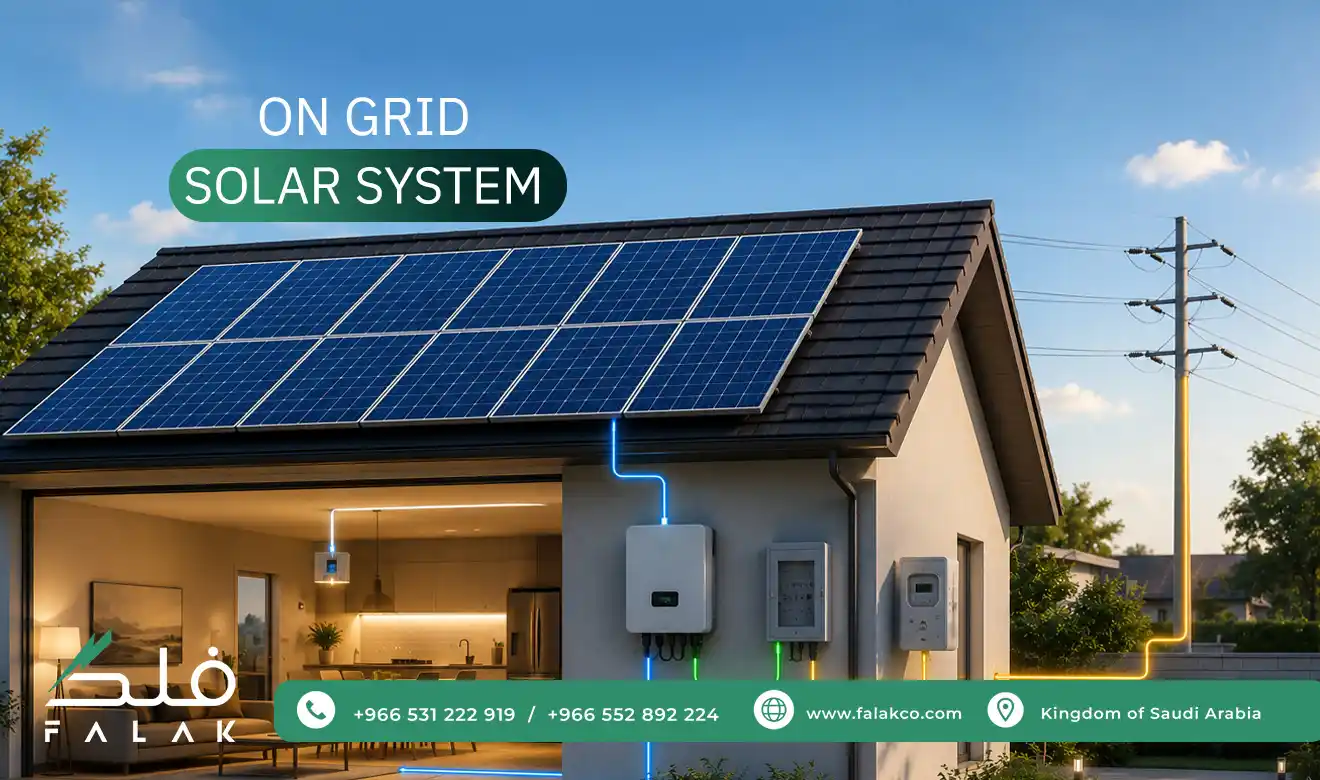
On-Grid (Grid Tied) Solar System is a solar PV system directly connected to the electrical grid of the property. The grid supplies electricity even when solar electricity production is not enough, and solar produces electricity during the day.
A conventional on-grid system usually doesn’t need batteries. This can make systems easier to manage and maintain and require less equipment for energy storage.
Definition of On Grid Solar System
An on-grid solar system uses PVs to produce electricity and feeds electricity into the properties’ electrical loads. Any additional electricity requirements can be supplied through the grid, depending on the system configuration and applicable local requirements.
A grid-tied solar system is, therefore suitable to buildings that already have good electricity connection and are seeking to include solar power into their electricity architectures.
How On Grid Solar Systems Work
During daylight hours, solar panels absorb sunlight and produce direct current electricity. This electricity is then transformed to alternating current by the inverter, which can be utilised by the electrical equipment in the property.
Generating solar electricity is used as per the configuration and electrical demand of the system. Electricity is supplied by the electricity grid if the sun isn’t providing enough.
This mode of operation is ideal for properties that use electricity during the daytime, such as offices, commercial buildings, farms and residential buildings.
Key Components of the System
The components of a standard on grid solar system are:
- Solar photovoltaic panels
- Grid-tied solar inverter
- Mounting structures
- Protection equipment and electrical cables
- Monitoring and control systems.
- Grid connection equipment
Benefits of On Grid Solar Systems?
An on-grid solar system might be able to offer a number of benefits to customers who are already connected to the electrical grid.
- Lowered usage of traditional electricity: Solar electricity can provide some of the electrical needs of the property during the day.
- No standard battery requirement: The system will still be connected to the grid, and generally no batteries are required in a standard grid-tied system.
- Smart use of solar generation during the day: If some properties need electricity during the day, they can use the solar energy when it is available.
- Scalable system design: The electricity demand of the property and the available installation space can be used for the design of the system.
- Reduced equipment complexity: An on-grid system may be less complex than some off-grid systems, as it relies on grid power instead of battery storage.
- Renewable energy supports: Solar installations play a role in the broader efforts to develop clean energy and Renewable Energy in Saudi Arabia.
The actual financial and energy savings will vary according to system size, electricity use, equipment characteristics, solar conditions and electricity arrangements to be used.
How On Grid Solar Systems Work?
Understanding the working of an on-grid system can be simplified as follows:
- Sunlight is harnessed by solar panels: PV modules transform solar radiation to direct current electricity.
- The inverter is used to transform electricity: Grid-tied inverter that transforms the DC electricity into AC electricity that is compatible with the electrical system of the property.
- Solar power feeds electrical loads: The electricity produced from solar power can be used by the electrical loads such as pumps, machinery, lighting, cooling, and other connected loads.
- The electrical grid stays connected: If the solar energy generated is not needed to meet demand, then the existing electrical grid can be used according to the connection arrangement applicable.
- The system is monitored: There’s monitoring equipment to monitor electricity production and system performance.
It is crucial to hire professional solar panel installation services because the panels, the inverter, electrical protection systems, mounting structures, and electrical connection to the grid have to work in unison.
Electricity use assessment is a first step in designing a system. Engineers can then figure out what size panel, what size inverter, mounting layout, and what electrical specifications are needed.
|
Step |
How It Works |
|
Solar Panels |
Convert sunlight into DC electricity. |
|
Inverter |
Converts DC electricity into AC electricity. |
|
Electrical Loads |
Solar power runs lights, pumps, machinery, and cooling systems. |
|
Grid Connection |
The electrical grid remains connected when additional power is needed. |
| Monitoring |
Tracks solar production and system performance. |
Best On Grid Solar System Provider in Saudi Arabia
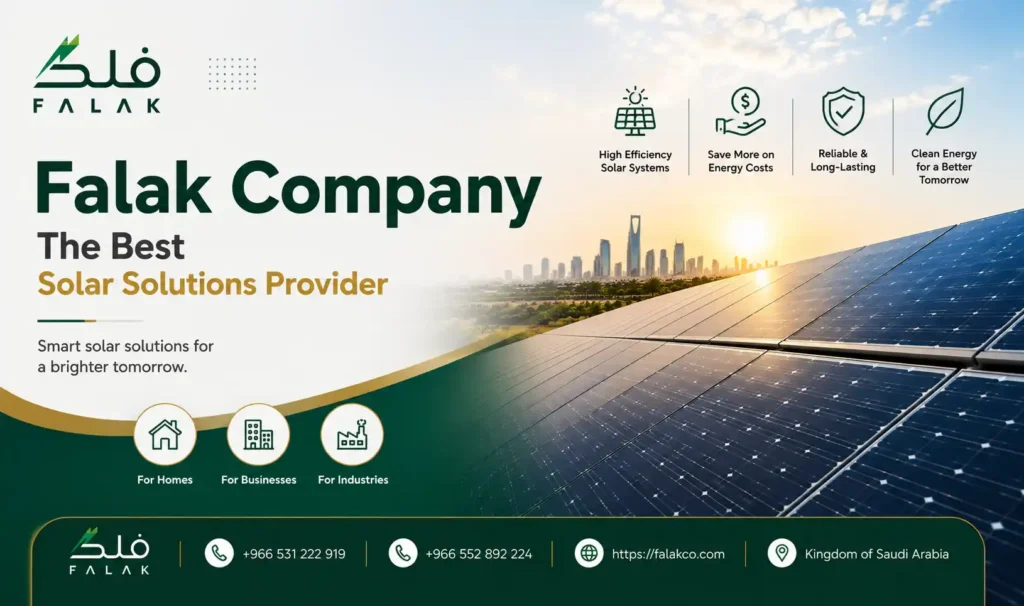
Selecting the correct provider is a very critical aspect of any grid-tied solar installation. A competent solar firm saudi arabia can offer a lot more than just equipment. The design, engineering, installation, commissioning, maintenance and technical support of systems all contribute to the overall quality of the project.
Falak Solar Energy Systems offer integrated solar solutions throughout Saudi Arabia. Its services include the following: System Design, Equipment Supply & Installation, Maintenance, Technical Consultation, Feasibility Studies.
Falak offers solar power systems Saudi Arabia for various purposes such as commercial, agricultural, governmental or other projects. It has solutions such as on-grid and off-grid systems, solar-powered agriculture, and much more.
If customers are thinking of installing a solar power system, Saudi Arabia, Falak can assess the energy requirements of the site and design a system that meets the actual demand and operating conditions of the site.
The solar company saudi arabia offers professional solar panel installation service as part of their integrated services. This enables customers to plan system design, procurement, installation and technical support as a single service.
As the use of solar technology keeps growing in the Kingdom, PVs are now being incorporated into the energy mix of businesses, farms and property owners. If access to the electrical grid is appropriate, an on grid installation may be a realistic beginning to solar power.
Choose Falak for Your On Grid Solar Project
Whether you need a system for a home, commercial facility, agricultural project, or other application, Falak can help assess your requirements and develop a suitable grid-connected solar solution. Contact Falak today to discuss your project and explore the right on grid solar system for your property.
FAQs
What is the on-grid solar system?
An on-grid solar system is a photovoltaic system connected to the existing electrical grid. Solar panels generate electricity during daylight hours, while the grid remains available when additional electricity is required. Standard systems typically operate without battery storage.
What is the difference between an on-grid and off-grid solar system?
An on-grid system remains connected to the electrical grid and typically does not require batteries. An off-grid system operates independently and generally requires battery storage to provide electricity when solar generation is unavailable.
Which is better hybrid or ongrid?
Neither is universally better because the appropriate option depends on the property’s requirements. On-grid systems are suitable for properties with reliable grid access and daytime solar demand, while hybrid systems offer battery storage and greater flexibility when backup power is required.
Can we convert Ongrid to hybrid?
In some cases, an existing on-grid system can be upgraded to a hybrid configuration by adding compatible battery storage, equipment, and control components. However, compatibility, inverter specifications, electrical design, and system capacity should be evaluated by a qualified solar professional first.
How much does an on grid solar system cost in Saudi Arabia?
The cost varies according to system capacity, solar panel and inverter specifications, mounting structures, electrical work, installation requirements, and project complexity. A site assessment and energy-load analysis are needed to determine the appropriate system size and provide an accurate quotation.